Southern Africa is home to some of the world’s most venomous snakes, including the Black Mamba, Puff Adder, Cape Cobra, and Mozambique Spitting Cobra. Whether you’re hiking in the Drakensberg, working on a farm in Limpopo, or exploring the bushveld, understanding snake bite first aid and carrying the right everyday carry (EDC) medical items can be lifesaving.
Understanding the Threat
South Africa records approximately 3,000-4,000 reported snake bites annually, with the Puff Adder responsible for most incidents due to its widespread distribution and camouflage. The Black Mamba, while less common, delivers potentially fatal neurotoxic venom. Cytotoxic bites from Puff Adders and Mozambique Spitting Cobras cause severe tissue damage, while neurotoxic bites from mambas and cobas affect the nervous system, potentially causing respiratory failure.
Critical First Aid Principles
The most important rule: get the victim to medical facilities immediately. Anti-venom is the only effective treatment, and time is critical. Call emergency services (10177 or 112 from mobile) or private emergency services like ER24 immediately. If possible, photograph the snake from a safe distance for identification, but never attempt to catch or kill it – this causes additional bites.
Keep the victim calm and still. Movement accelerates venom circulation through the lymphatic system. Immobilise the bitten limb using a splint if available. Remove jewellery and tight clothing before swelling begins. Position the limb at or slightly below heart level.
What NOT to Do
Forget everything you’ve seen in movies. Do not apply a tourniquet – this can cause tissue death and limb loss. Do not cut the wound or attempt to suck out venom. Do not apply ice or heat. Do not give alcohol or pain medication that thins blood.
Essential EDC Medical Items
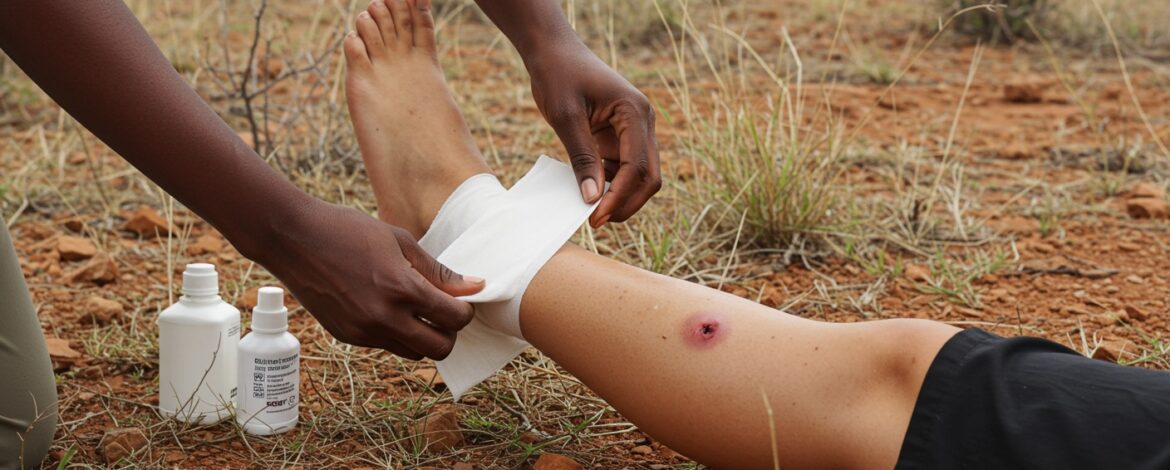
Your bush EDC medical kit should include: a reliable mobile phone with emergency numbers pre-programmed and offline maps downloaded; a comprehensive first aid manual specific to Southern African snakes; sterile gauze pads and bandages for covering wounds without applying pressure; a SAM splint or rigid materials for immobilisation; a permanent marker to mark bite location and progression of swelling; a digital watch to monitor vital signs and time; and emergency contact cards with medical aid details.
Consider carrying a satellite communicator like a Garmin inReach if venturing into areas without cell coverage – common in places like the Kgalagadi or remote Mpumalanga bushveld. Include a space blanket for treating shock and a basic trauma kit with gloves, antiseptic wipes, and medical tape.
Preparation is Key
Know the location of the nearest hospitals with anti-venom stocks. In rural areas, this might be hours away. Facilities like Tygerberg Hospital in Cape Town and Steve Biko Academic Hospital in Pretoria maintain comprehensive anti-venom supplies. Save numbers for the Poison Information Helpline (0861 555 777) and the African Snakebite Institute.
Take a wilderness first aid course that covers snake bite management. Organisations like Wilderness Medical Training SA offer specific training for Southern African conditions. Educate yourself about snake behaviour – most bites occur when people accidentally step on snakes or attempt to handle them.
Final Thoughts
Remember: prevention is better than cure. Wear closed shoes and long trousers in the bush, watch where you place your hands and feet, and use a torch at night. With proper preparation, the right EDC items, and knowledge of correct first aid procedures, you can significantly improve outcomes if a snake bite occurs in the Southern African wilderness.