
South Africa’s high crime rate leaves many citizens wondering about their legal rights when faced with violent threats. While our law permits self-defence, the boundaries are more nuanced than many realize. Understanding these limits could mean the difference between protecting yourself lawfully and facing criminal charges for excessive force.
The Legal Foundation of Private Defence
South African law allows you to use force to repel an unlawful attack that has commenced or is imminently threatening your life, bodily integrity, property, or other protected interests. However, your defensive action must meet strict requirements: it must be necessary, proportionate to the threat, and directed only at your attacker.
The Supreme Court of Appeal has made clear that self-defence isn’t a carte blanche to respond violently. You must demonstrate that you had no reasonable alternative but to use force. If you can avoid an attack by retreating or running away, the law requires you to do so.
The Proportionality Principle
The most critical aspect of lawful self-defence is proportionality: your response cannot be more harmful than necessary to ward off the attack. Courts weigh the interests you’re protecting against the harm caused by your defensive actions.
Consider a common scenario: you discover an unarmed burglar in your home stealing electronics. Shooting them would constitute excessive force and could result in criminal liability. The threat to your property doesn’t justify taking a life. However, if that same burglar brandishes a weapon and threatens your life, lethal force may become legally justifiable.
The level of force must match the severity of the threat. Pepper spray or a taser might be appropriate for an unarmed attacker, while a firearm could be justified against multiple armed assailants. The key question courts will ask: was your response the minimum force necessary to stop the immediate threat?
Defending Property vs. Defending Life
South Africa’s Constitution emphasizes the sanctity of human life, and recent court decisions suggest this right takes precedence over property rights. You cannot use lethal force merely to protect property. If a thief pulls out a firearm and aims at you during a property crime, only then would lethal force be legally justified to protect your life.
Defending with force must be the last resort when no alternative exists to protect yourself and others. The court will scrutinize whether you could have retreated, called for help, or used non-lethal methods to stop the threat.
The Immediacy Requirement
The danger must be happening or about to happen immediately. Self-defence is not justifiable if the threat has already passed. You cannot pursue a fleeing attacker or retaliate after the fact. Private defence must be aimed at an attack which has already begun or is imminent. Shooting someone who is running away after attempting to rob you would likely result in murder charges.
Practical Considerations for EDC Users
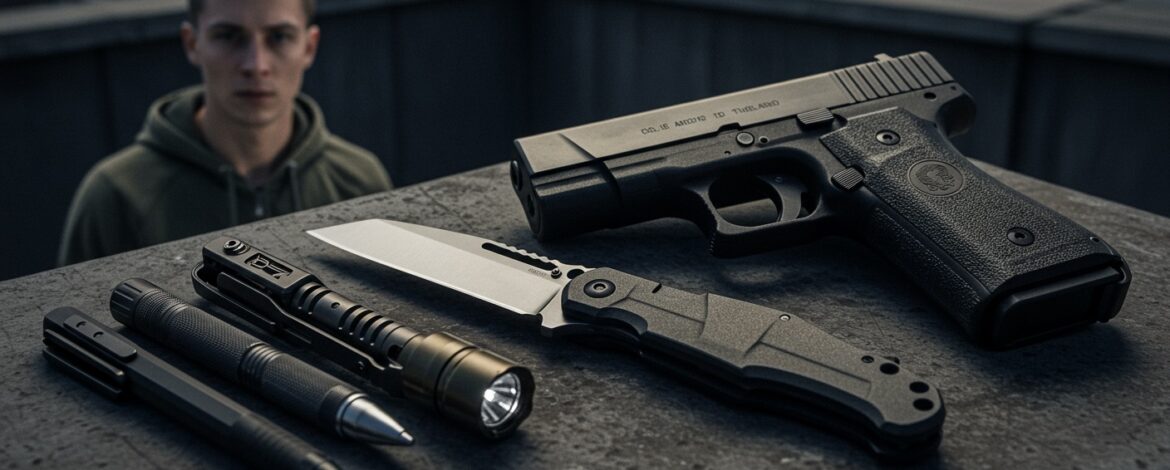
For those carrying everyday defence tools, understanding these principles is essential. Tasers, stun guns, and pepper sprays are legal to carry without permits and offer non-lethal options that are more likely to meet proportionality requirements. Firearms require licensing and come with the heaviest scrutiny when used in self-defence.
Excessive defence may result in criminal liability for assault, culpable homicide, or even murder. After any defensive incident, you’ll need to prove your actions met all legal requirements. Any injuries to bystanders or excessive damage could render your act unlawful.
The Bottom Line
South African self-defence law balances your right to protect yourself with constitutional protections for human life. The courts will examine whether your response was necessary, proportionate, and directed solely at your attacker. When choosing EDC items and planning your response to potential threats, remember that your actions will be judged after the fact against these strict criteria.
If you’re forced to defend yourself, document everything and seek legal counsel immediately. Understanding these boundaries before a crisis occurs gives you the best chance of both surviving an attack and avoiding criminal prosecution.